Stop Chasing Snowflake Designs. Hire for UX Instead.
A distinctive website is tempting, but unique design often hurts conversions. Here is why business owners should hire a software engineer who prioritises usability, clarity, and results over novelty.

The Conversation That Starts With "We Want Something Different"
On a lot of discovery calls, the brief sounds like this. The business is ready for a new website or portal. They have seen competitors. They want to stand out. Someone on the team says what many say next: "We do not want it to look like everyone else."
I understand the instinct. When you are investing in a digital presence, you want it to feel like your brand. You want visitors to remember you.
Then we talk about what the site actually needs to do. Generate leads. Book appointments. Onboard clients. Reduce support load. Move people from landing page to enquiry without friction.
That is when the conversation shifts.
After 20 years building websites, portals, and conversion focused platforms for businesses across Australia and the United States, the pattern I see is consistent. The sites that perform best are rarely the most experimental. They are the ones where visitors know where to click, what to read, and what to do next without thinking about the interface.
That outcome is not luck. It is UX discipline. And it usually comes from someone who knows how to build for behaviour, not just aesthetics.
Unique Design vs UX Led Engineering
Before we talk about who should lead the work, here is an honest comparison of the two mindsets I see in these projects.
| Factor | Chasing unique design | Hiring for UX led engineering |
|---|---|---|
| Primary goal | Stand out visually | Help visitors complete the intended action |
| Navigation | Often unconventional | Familiar patterns that reduce cognitive load |
| Decision making | Taste, trends, competitor envy | Data, user behaviour, and conversion goals |
| Page structure | Creative layouts and effects | Clear hierarchy, one primary action per page |
| Performance | Animations and heavy visuals can slow load | Speed treated as part of the user experience |
| Long term results | Impressive launch, unclear ROI | Measurable improvements in enquiries, bookings, or sales |
| Best owner | Brand focused stakeholder with strong opinions | Software engineer accountable for usability and outcomes |
Neither column is about ugly versus beautiful. The difference is what the design is optimising for.
A distinctive brand still matters. Copy, photography, offer positioning, and trust signals should feel like you. The question is whether the interface helps people act, or asks them to decode your creativity first.
Why "Snowflake Design" Feels Right and Performs Wrong
There is nothing wrong with wanting a polished brand. The problem starts when originality becomes the success metric.
I see the same failure modes repeatedly:
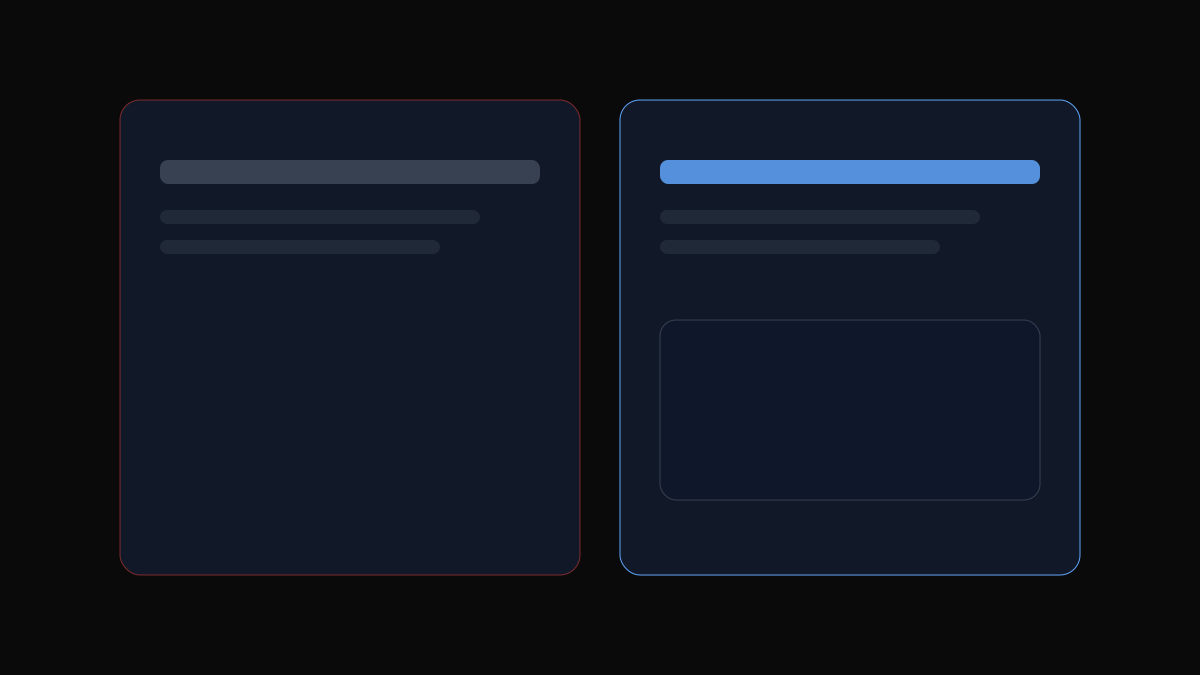
Unfamiliar navigation. When users have to learn your site before they can use it, most leave. About 67% of leading mobile ecommerce sites still score mediocre or poor on navigation performance. Non standard layouts usually make that worse, not better.
Too many choices. Research on choice overload is well known for a reason. Present users with 24 options and conversion can drop to around 3%. Reduce that to 6 focused options and conversion can rise toward 30%. More design is not always more clarity.
Visual clutter disguised as innovation. Complex layouts add friction. Nielsen Norman Group research has long shown that clearer, simpler designs can dramatically outperform busy ones. Orbit Media's analysis of business websites found that top converting sites often had fewer page elements, not more.
Speed treated as optional. Google's data shows bounce rate rising sharply as load time increases. From 1 to 3 seconds, bounce can increase by 32%. From 1 to 5 seconds, it can jump 90%. Heavy visual effects are often part of that problem.
These are not abstract UX principles. They show up in analytics every time I audit a site that looks great in a presentation deck and underperforms in production.
You Are Not Competing on Uniqueness. You Are Competing on Clarity.
Business owners often worry that familiar patterns make them look generic.
In practice, visitors do not reward originality in navigation. They reward speed, clarity, and trust. They want to know:
- What you do
- Who it is for
- Why they should care
- What to do next
If those four answers are easy to find, the site works. If visitors have to explore first, the site is asking them to do unpaid work.
That is why the best conversion improvements are often boring in the best way:
- A clearer headline above the fold
- One primary call to action instead of four
- A shorter form
- A checkout step removed
- A page structure that matches how people already browse the web
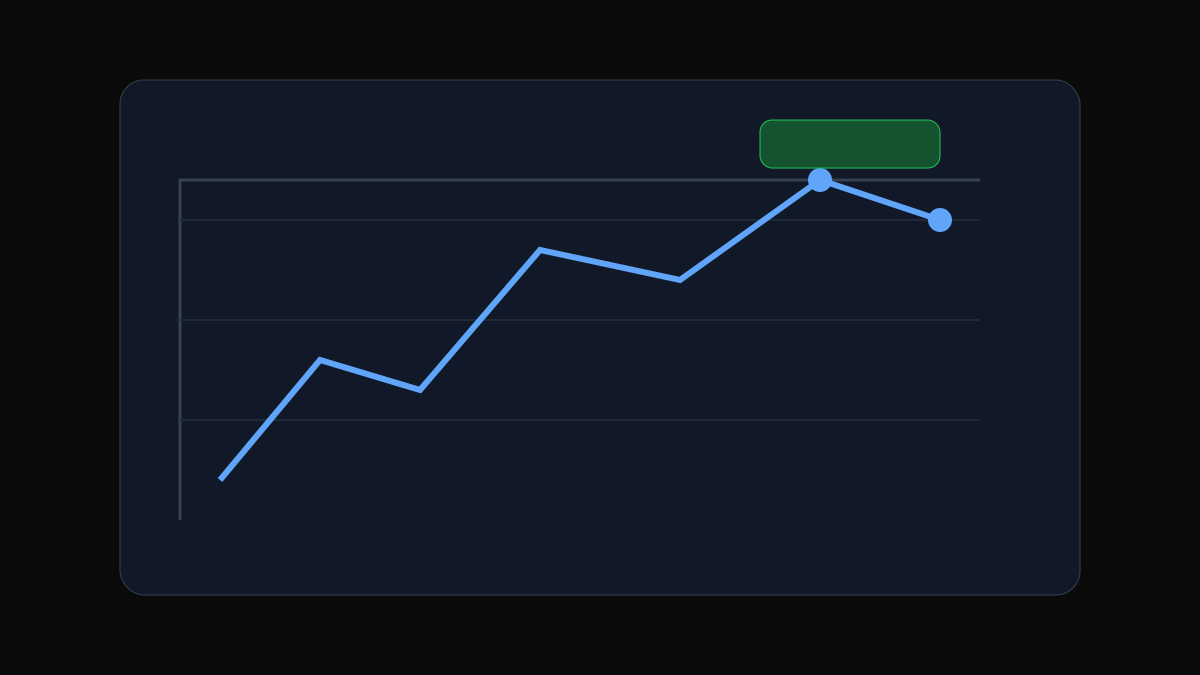
Expedia reportedly increased annual profit by $12 million by removing one redundant checkout field. HubSpot saw a 120% conversion lift by cutting unnecessary form fields. Those wins did not come from a bolder visual concept. They came from reducing friction.
Why This Is a Job for a Software Engineer, Not a Mood Board
Here is the shift I want business owners to make.
If conversions, bookings, and lead quality matter, then UX is not a decorative layer added at the end. It is part of the build. That means the person responsible for the site needs to think like an engineer and a product person at the same time.
A software engineer focused on UX will ask different questions than a designer briefed to "make it unique":
- Where are users dropping off today?
- What is the one action this page must drive?
- Does this layout increase or reduce cognitive load?
- Will this component slow mobile performance?
- Can we test this change and measure the result?
- What happens after launch when behaviour changes?
That is the work clients hire me for. Not to produce another concept that wins a screenshot. To build something that moves the numbers.
When business owners try to direct every visual decision themselves, two things happen. First, they optimise for opinion instead of outcome. Second, nobody is running the business while weeks disappear into layout debates.
If you are hiring someone to build or rebuild your site, the better question is not "How different can we make this look?" It is "Who will be accountable for the user experience after it goes live?"
What Good UX Led Engineering Looks Like in Practice
When I lead a website or portal project, design decisions are tied to behaviour from the start.
Start With the Data
Before changing anything, I look at analytics, funnels, and drop off points. Often the problem is not weak messaging. It is a form buried too low, a confusing menu, or a mobile layout that breaks trust in the first few seconds.
Define the Conversion Goal
Every page should have a primary job. Book a consult. Request a quote. Start onboarding. Download a resource. If a design element does not support that job, it needs a reason to exist.
Use Proven Patterns, Not Performance Stunts
Logo top left. Clear navigation. Strong hierarchy. Obvious next step. Familiar patterns free attention for your offer, not your interface. Simpler navigation alone has been shown to drive significantly more clicks toward purchase in multiple industry studies.
Treat Speed as UX
Performance is part of usability. Amazon famously tied 100ms of delay to measurable revenue impact. I treat heavy animation, oversized media, and unnecessary scripts as conversion risks, not features.
Test, Measure, Iterate
The launch is not the finish line. A/B testing, event tracking, and post launch refinement are where many of the biggest gains appear. I would rather improve a clean, fast site with real data than polish a unique layout that never gets measured.
Business Owner vs Engineer: Who Should Own UX?
| Factor | Business owner drives design direction | Software engineer owns UX outcomes |
|---|---|---|
| Focus | Brand impression and differentiation | User behaviour and conversion performance |
| Risk | Subjective decisions and endless revisions | Build decisions tied to measurable goals |
| Navigation and structure | Often based on preference | Based on usability patterns and data |
| Performance | Often considered late | Built in from the start |
| After launch | Unclear ownership when results disappoint | Monitoring, iteration, and accountability |
| Best for | Low stakes brochure pages with no conversion goal | Lead generation, bookings, portals, and revenue paths |
You should absolutely own brand voice, offer positioning, and what makes your business different. You should not have to become a UX specialist to get a site that converts.
That is what the engineer is for.
What This Looks Like in Real Projects
I worked with a marketing agency whose landing page looked impressive. Custom scroll based navigation. Strong visual concept. Strong brand presence.
The data told a different story. 73% of visitors never moved past the first fold. We replaced the experimental structure with a standard layout, clearer hierarchy, and a single primary CTA above the fold. Bounce rate dropped 28% in two weeks.
That is the kind of result business owners care about. Not whether the navigation was technically novel. Whether the site finally worked.
I see the same pattern across healthcare, professional services, education, and agency work. The businesses that win online are not always the ones with the most original homepage. They are the ones whose sites make the next step obvious.
Making the Decision With Clear Eyes
If you are planning a redesign, ask:
- What action should this site drive, and how will we measure it?
- Are we optimising for impression or conversion?
- Who will own UX after launch?
- Do we have analytics in place to validate decisions?
- Are we hiring for visual novelty or for engineering accountability?
Your answers matter more than the latest design trend on LinkedIn.
A beautiful site that confuses visitors is an expensive brochure. A clear site that guides visitors toward action is a business asset. The difference is usually the person building it.
If you are wondering why a good looking site is not converting, or you are about to invest in a redesign and want to avoid another snowflake build, I would be happy to look at it with you. Sometimes the biggest gains come from simpler structure, faster load times, and clearer calls to action. The data usually points there long before the mood board does.

Andre · Tech Lead
Tech lead building digital solutions to real world problems with a data driven approach. I work with service based businesses and marketing agencies across Australia and the US, turning complex challenges into scalable systems that automate workflows and deliver measurable ROI.
Ready to Get Started?
Let's discuss how we can build scalable platforms that reduce manual overhead and drive measurable efficiency gains.